Monday, November 26, 2012
The Agricultural Core
Just outside of Pittsburg lays the Agricultural core of the Untied States. Pittsburg is centered in the overlap between the two regions of the manufacturing and agricultural core. The agricultural core begins in Erie, Pennsylvania and extends up to the Great Lakes and West to the Great Plains. Immigrants from Europe passed through Pittsburg to enter the west where there were more jobs and opportunities. Pittsburg is the gateway between the midwest and Megalopolis.
Source:
http://www.ioling.org/images/maps/iol-2011.png
The Southern Coastlands:On the Subtropical Margin
Oil in Pittsburg
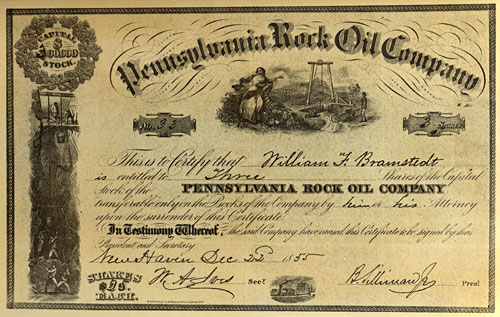
In the river valley of the Allegheny, beneath the surface laid salt and oil wells. Samuel Kier ,a Pittsburg druggiest began selling the oil from the rocks found in the salt wellsin the 1850's. He found that he could use the oil in lamps and thus founded the Pennsylvania Rock Oil Company. Once word got out about his find, investors began taking interest in him and his "black gold". The area transformed from a farm town into a booming oil region. Drill and pumps were made to extract the oil and town were created to support the boom. At the height, Pennsylvania was responsible for 1/3 of the world's oil production. it was not until oil was found in Texas in 1901 that the oil boom ended.
Sources:
http://www.enopetroleum.com/earlyoilpennsylvania.html
Saturday, October 13, 2012
The Changing South
Andrew Carnegie born in 1835 in Scotland soon immigranted the the U.S and lived in Pittsburgh. He worked in a cotton factory in town and always had a fancy for the railroads and steel. He made his fortune being a part of the Pennsylvania Railroad Company and in 1870 he broke away and formed his own company. He founded his first steel company near Pittsburgh and thus created a steel company, The Carnegie Steel Company. John Pierpont Morgan bought the company in 1901 and was then soon incorporated it into the U.S Steel corporation. The Pittsburgh U.S Steel Company was in direct competition with steel mills in the South. To decrease the competition and make them more supreme c the Pittsburgh Plus was created, which was an extra tax for consumers of steel in Alabama. Firms in the South found it cheaper to get steel from Pittsburgh than from Alabama. The policy was eventually ruled illegal but it left damage to the Alabama steel economy. This Pittsburgh Plus contributed to the South's slower economy.
Sources:
http://www.history.com/topics/andrew-carnegie
http://explorepahistory.com/kora/files/1/2/1-2-1317-25-ExplorePAHistory-a0k9q9-a_349.jpg
Appalachia
With Pittsburgh being on the outskirts of the Appalachia region, coal is found in the foothills near the city. Coal is what put the city on the map and made it an important part of U.S history. Coal seems were discovered in the plateaus, and were exposed by the rivers and stream's erosive powers. These seems of coal are what powered Pittsburgh steel mills. According to William Edmund, from his book, Coal in Pennsylvania, " The earliest record of actual coal mining in Pennsylvania is shown on a “Plan of Fort Pitt and Parts Adjacent” in 1761. Fort Pitt was located in what is now downtown Pittsburgh where the Allegheny and Monongahela Rivers join to form the Ohio River. The mine was located across the Monongahela River near the top of Coal Hill (now called Duquesne Heights). These early miners removed the first few tons of coal from the fabulous Pittsburgh seam, which has been called, with considerable justice, the world’s most valuable single mineral deposit." With the rich deposit of coal, mining became a major industry in Western Pennsylvania. The mines gave new job opportunities to immigrants and neighborhoods in Pittsburgh began to swell in the 1800's and 1900's. The immigrants brought with them their rich culture and religions.Today many of the mines have been closed since the 1980's. When the mines closed the ethnic culture began to leave Pittsburgh since people had to search for new job opportunities else where.
Sources:
http://pittsburgh.about.com/gi/dynamic/offsite.htm?site=http%3A%2F%2Fwww.dcnr.state.pa.us%2Ftopogeo%2Feducation%2Fcoal%2Fes7.pdf
http://www.coalcampusa.com/westpa/index.html
http://images.asc.ohio-state.edu/is/image/eHistory/mmh/doc_humanmachinery/coalminers.jpg
The Bypassed East
Since Pittsburgh is located near three rivers, fishing is easily accessible. After the closer of the mills and steel plants, the rivers became less polluted and fish began to live in the waters again. Fish found in the rivers are, smallmouth bass, walleyes and saugers and rainbow trout. The best places to fish are off bridges and near the cement barriers of the rivers. Also old docks and boat ramps have been found to have large sources of fish near them. Even though Pittsburg is a large city, there are still opportunities to fish and make you feel as if you have left the city behind you for a moment. The Allegheny Monongahela and Ohio Rivers are excellent places to go fishing while in the Pittsburgh area.
Sources:
http://www.post-gazette.com/stories/sports/hunting-fishing/city-fishing-lots-of-action-for-anglers-who-know-where-to-go-347446/
http://traveltips.usatoday.com/fishing-pittsburgh-pennsylvania-5008.html
Since Pittsburgh is located near three rivers, fishing is easily accessible. After the closer of the mills and steel plants, the rivers became less polluted and fish began to live in the waters again. Fish found in the rivers are, smallmouth bass, walleyes and saugers and rainbow trout. The best places to fish are off bridges and near the cement barriers of the rivers. Also old docks and boat ramps have been found to have large sources of fish near them. Even though Pittsburg is a large city, there are still opportunities to fish and make you feel as if you have left the city behind you for a moment. The Allegheny Monongahela and Ohio Rivers are excellent places to go fishing while in the Pittsburgh area.
Sources:
http://www.post-gazette.com/stories/sports/hunting-fishing/city-fishing-lots-of-action-for-anglers-who-know-where-to-go-347446/
http://traveltips.usatoday.com/fishing-pittsburgh-pennsylvania-5008.html
Friday, October 12, 2012
Manufacturing Core
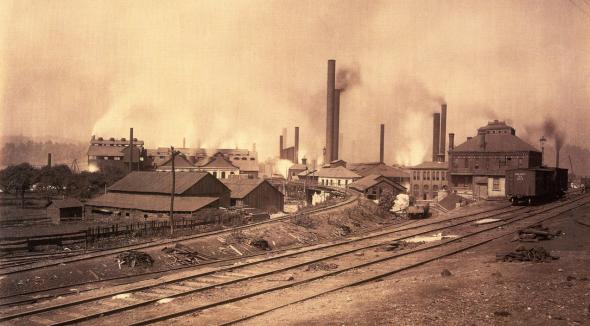
As mentioned perviously, Pittsburgh was a part of the Eastern manufacturing core in the U.S. Its location near three major rivers for access to other markets and transportation, and a supply of bituminous coal made in to a central player in the Steel Rail- Epoch from 1870 -1920. During this time steel began to replace the iron used in making railroads. The development of the city of Pittsburgh began through the United States Steel Corporation and became a steel producing center. Plants were created near Pittsburgh to take advantage of the low coast water transportation and the steel being created there. As the steel industry grew so did the city and an urban center was thus formed. AndrewCarnegie can be attributed to the reason Pittsburgh became a major steel town. In 1875 he opened the largest steel plant, the Edgar Thompson, in the Pittsburg area. And in 1899 he created the Carnegie Steel Company which soon became a major leader in the Steel and Railroad industry.
Sources:
http://pittsburgh.about.com/cs/famous/p/andrew_carnegie.htm
http://steelcityartist.files.wordpress.com/2010/10/young.jpg
As mentioned perviously, Pittsburgh was a part of the Eastern manufacturing core in the U.S. Its location near three major rivers for access to other markets and transportation, and a supply of bituminous coal made in to a central player in the Steel Rail- Epoch from 1870 -1920. During this time steel began to replace the iron used in making railroads. The development of the city of Pittsburgh began through the United States Steel Corporation and became a steel producing center. Plants were created near Pittsburgh to take advantage of the low coast water transportation and the steel being created there. As the steel industry grew so did the city and an urban center was thus formed. AndrewCarnegie can be attributed to the reason Pittsburgh became a major steel town. In 1875 he opened the largest steel plant, the Edgar Thompson, in the Pittsburg area. And in 1899 he created the Carnegie Steel Company which soon became a major leader in the Steel and Railroad industry.
Sources:
http://pittsburgh.about.com/cs/famous/p/andrew_carnegie.htm
http://steelcityartist.files.wordpress.com/2010/10/young.jpg
Megalopolis
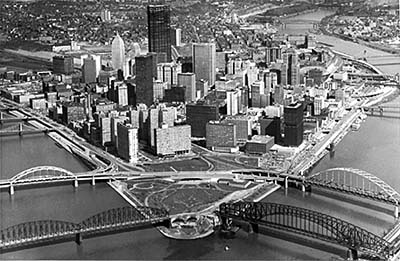
Pittsburgh has a population of 350, 363, with a median age of 33 years. Population density is 5500 people per square mile. The top three races that make up Pittsburgh are,White, Black and Asian with a per capita income of $18,000. The unemployment rate is currently at 4.25 %. It is the 13th largest city in the U.S and is 500 miles from the cities that are a part of Megalopolis, with its neighbor being Philadelphia. The major religions are, Protestant, Catholic and Jewish. "The Pittsburgh area is at the center of an extensive highway system focused around Interstates 70, 80 and 76/376 (the Pennsylvania Turnpike) which run east and west, and Interstate 79/279 that runs north and south."Being a part of Allegheny County, there more than 1,700 bridges and 720 are within the Pittsburgh city limits. Because its location near the Allegheny and Ohio River bridges are necessary for transportion. Pittsburgh is the largest inland port in the U.S., providing access to the nation's 9,000 mile inland waterway system.
Sources:
http://pittsburgh.about.com/cs/aboutpittsburgh/a/facts.htm
http://www.city-data.com/us-cities/The-Northeast/Pittsburgh-Population-Profile.html
http://www.city-data.com/us-cities/The-Northeast/Pittsburgh-Transportation.html
http://pittsburgh.net/about_pittsburgh.cfm
http://pghbridges.com/articles/p1969.JPG
Pittsburgh has a population of 350, 363, with a median age of 33 years. Population density is 5500 people per square mile. The top three races that make up Pittsburgh are,White, Black and Asian with a per capita income of $18,000. The unemployment rate is currently at 4.25 %. It is the 13th largest city in the U.S and is 500 miles from the cities that are a part of Megalopolis, with its neighbor being Philadelphia. The major religions are, Protestant, Catholic and Jewish. "The Pittsburgh area is at the center of an extensive highway system focused around Interstates 70, 80 and 76/376 (the Pennsylvania Turnpike) which run east and west, and Interstate 79/279 that runs north and south."Being a part of Allegheny County, there more than 1,700 bridges and 720 are within the Pittsburgh city limits. Because its location near the Allegheny and Ohio River bridges are necessary for transportion. Pittsburgh is the largest inland port in the U.S., providing access to the nation's 9,000 mile inland waterway system.
Sources:
http://pittsburgh.about.com/cs/aboutpittsburgh/a/facts.htm
http://www.city-data.com/us-cities/The-Northeast/Pittsburgh-Population-Profile.html
http://www.city-data.com/us-cities/The-Northeast/Pittsburgh-Transportation.html
http://pittsburgh.net/about_pittsburgh.cfm
http://pghbridges.com/articles/p1969.JPG
Subscribe to:
Posts (Atom)